


Tired of Banff Crowds? Here's How to Get Away From Tourists in Banff: Kananaskis Wilderness and Find Real Wilderness in the Canadian Rockies

By Wilderness Escape Adventures | Guided Wilderness Experiences in Alberta's Rocky Mountains
There's an experience most visitors to the Canadian Rockies share, and it's not the one they came for....
You planned this trip for months. Maybe years. You pictured silence, mountains, something wild and real. Instead, you're standing at the edge of Lake Louise surrounded by a thousand other people holding up their phones, waiting for someone to move so you can get the shot. Traffic is backed up on the Trans-Canada.
A tour bus is idling. Someone's travel vlog is playing out loud.
This is not the wilderness. This is a theme park with better scenery.
And the thing is, the real wilderness? It's right there. It's just off the trail most people never take.
The Banff Problem: When Paradise Gets Overrun
Let's be honest about Banff. It is one of the most staggering landscapes on earth. Banff National Park is genuinely magnificent, with jagged limestone peaks, turquoise glacial lakes, and grizzly bears moving through meadows in the early morning light. None of that is exaggerated. The problem is that over 4.28 million people visited Banff in a single recent year, making it the busiest period on record. On peak summer days, the visitor population of the tiny townsite swells to over 50,000 people. Traffic flaggers have been required around the clock just to manage access to Moraine Lake. On the August long weekend, more than 31,000 vehicles entered the park in a single day.
Banff has a capacity problem, and locals and conservationists are openly calling it overtourism. One longtime resident described the experience of trying to enjoy the park this way: "It's disheartening to visit a location to enjoy nature only to encounter the same crowding you would find on the London subway". Lake Louise, Moraine Lake, Johnston Canyon, Tunnel Mountain — these iconic spots are spectacular, but they are packed. The photo everyone has taken? Hundreds of thousands of people have taken the same photo, from the same spot, in the same light.
Jasper National Park, further north along the Icefields Parkway, offers a quieter version of the national park experience, but it draws its own significant crowds in summer and faces the same pressures that come with being one of the most photographed landscapes in Canada. Both parks are worth knowing and worth driving through. But if you are genuinely trying to figure out how to get away from tourists in Banff and experience something that feels real rather than managed, both parks will ultimately leave you wanting more.
The truth that the travel brochures won't tell you is this: the most extraordinary wilderness in the Canadian Rockies is not found in the postcard spots. It is in the places most people drive right past.
The Escape Is Closer Than You Think: Kananaskis Country
Sixty kilometres southwest of Calgary and sitting directly alongside Banff National Park lies one of the most underappreciated wilderness areas in North America. It is called Kananaskis Country, and most people who have been to Banff have never properly explored it.
Spanning more than 4,000 square kilometres of protected parks, wildland areas, and recreation zones along the eastern slopes of the Canadian Rockies, Kananaskis Country is vast, raw, and genuinely wild. Former Alberta Premier Peter Lougheed flew over this landscape in the 1970s, was moved by what he saw, and declared it protected in 1978. He understood what many visitors still haven't discovered. This is not just scenery. This is a living, breathing wilderness ecosystem.
The difference between Banff and Kananaskis is not a matter of beauty.
It is a matter of who you share it with.
While Banff's parking lots fill by 7 a.m., Kananaskis trails begin in relative quiet. While Lake Louise is gridlocked, the upper reaches of the Kananaskis Valley, the deep drainages off the Smith-Dorrien Spray Lakes Road, and the sprawling terrain beyond the front ranges are still places where you can walk for hours without seeing another person. Where trail signs are simple and facilities are rustic. Where the loudest sounds are wind, river, and the occasional wolf.
What Kananaskis Really Looks Like
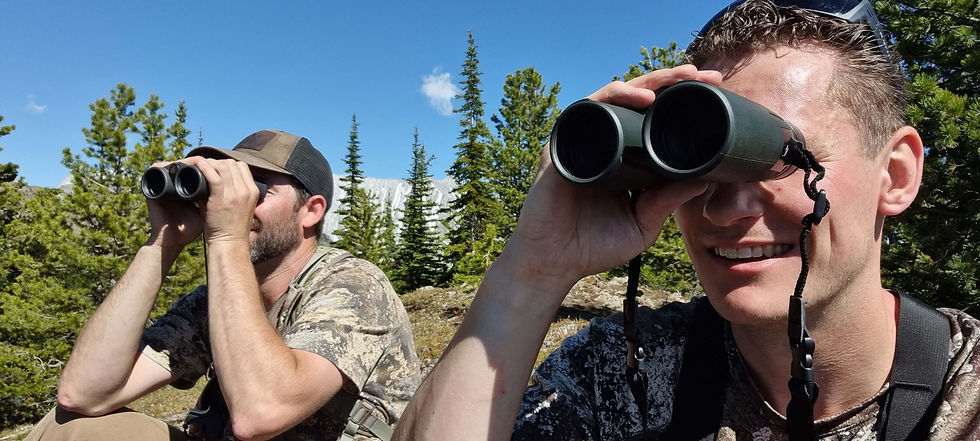
You set out at dawn. The sky is the particular dark blue that exists only above 2,000 metres. Your boots crunch through frost-covered grass as you leave the trailhead, and within forty minutes, you have already left behind every other person. The trail narrows. Then it disappears. You are now moving through country that belongs to the animals more than it belongs to you. The tracks in the mud ahead are not human. You glass a distant ridgeline with binoculars and count elk, six, eight, moving slowly across the alpine meadow, unbothered, unaware.
This is what Kananaskis offers that the Banff corridor cannot: prime wildlife habitat where animals move freely because people rarely go there.
Kananaskis Country is home to between 55 and 60 grizzly bears. Both grizzly bears and black bears are regularly encountered throughout the valley systems. Elk, moose, mountain goats, bighorn sheep, coyotes, wolves — the wildlife here is not managed or habituated the way roadside wildlife in the national parks often is. It is genuinely wild. The best places to spot bears are along Highway 40 through the Kananaskis Valley and along the Smith-Dorrien Spray Lakes Road, especially early in the morning.
There is something important to understand, though: this wildness comes with real responsibility. The further you go into Kananaskis backcountry and especially off-trail, the more serious bear country you enter. In summer 2025, all of Kananaskis Country was placed under a region-wide bear warning, with bears actively charging on well-frequented trails. Seventeen bear advisories were active across the Bow Valley at once. Alberta Parks puts it directly: make noise, hike in groups, carry bear spray, and know how to use it.
This is not a place to wander naively. It is a place that rewards respect, preparation, and knowledge. And it is exactly the kind of terrain where having an experienced guide is the difference between a profound experience and a dangerous mistake.
Hiking in Kananaskis: Day Trails and What Lies Beyond Them
Kananaskis Country and Peter Lougheed Provincial Park within it offer excellent designated hiking trails for visitors of all levels, and campgrounds throughout the valley provide good bases for multi-day stays. Trails like the Rawson Lake hike, Ptarmigan Cirque, the Ribbon Lake trail, and the routes around Upper and Lower Kananaskis Lake are beautiful, well-maintained, and far less crowded than anything in Banff National Park. On a weekday in shoulder season, you can have an entire trail to yourself.
But this is still organised, designated recreation. The campgrounds in Kananaskis and Peter Lougheed are proper campgrounds, with sites, fire rings, and neighbours a short walk away. The backcountry tent camping options within the parks, places like Aster Lake or the Turbine Canyon campsite, are genuinely remote and require hiking your gear in over serious terrain. These are exceptional wilderness experiences, but they are also rustic in the truest sense: small tent, freeze-dried meals, everything you need on your back, and bears genuinely active in the surrounding landscape. Not everyone's comfort zone, and there is no shame in that.
If you want the wilderness without having to become an overnight backcountry trekker, the answer is in the land that surrounds Kananaskis Country rather than within it.
And we would love to show you! Learn more about us
Crown Land and the PLUZ Zones: Where Real Solitude Lives
Adjacent to Kananaskis Country, the Public Land Use Zones (PLUZs) and Crown land of Alberta represent something most visitors to the Canadian Rockies never know exists. This is public land, owned by all Albertans, open for responsible recreation, and almost entirely without crowds.
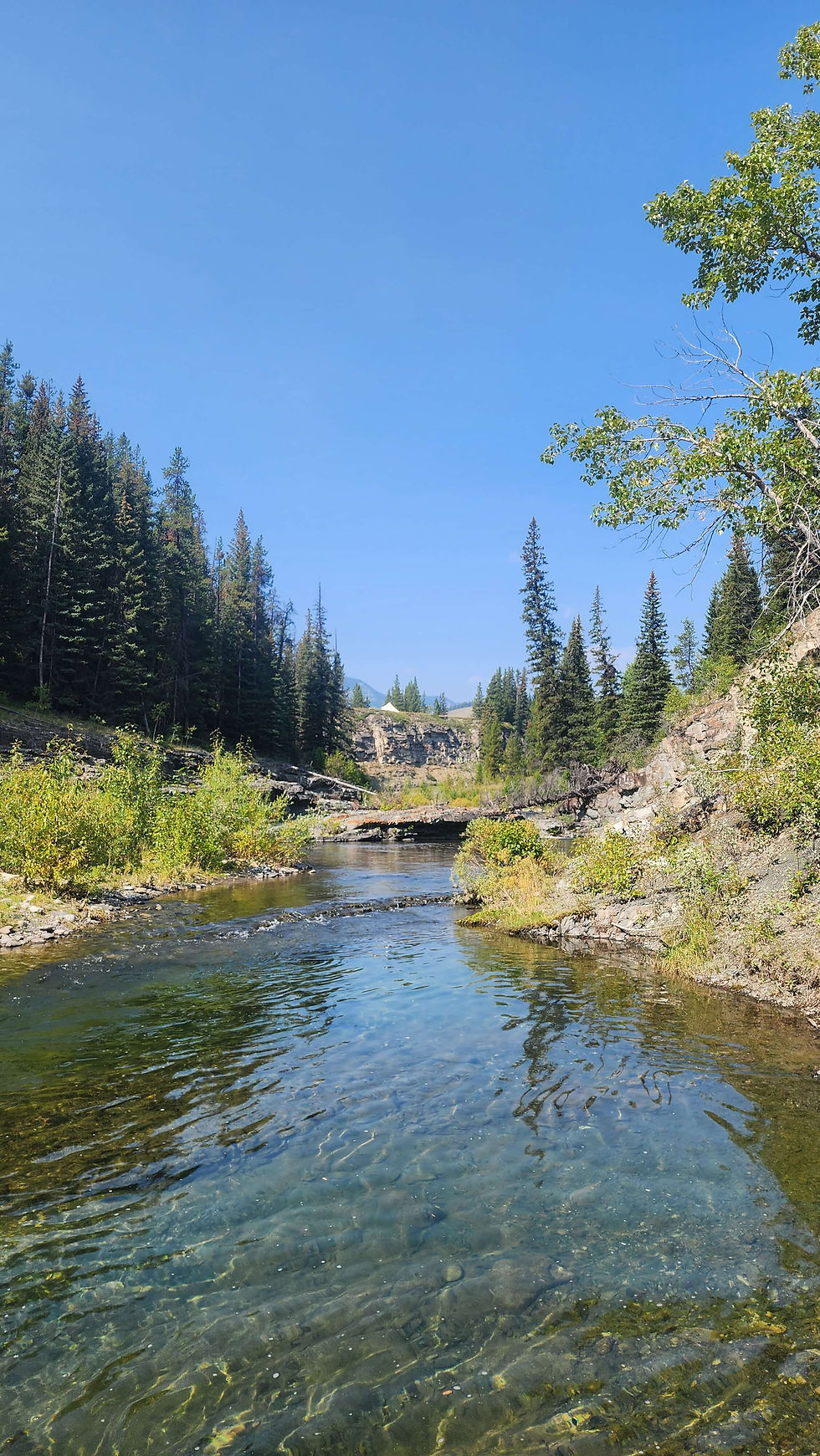
On Crown land, there are no nightly campground fees, no reservation systems, no assigned sites, and no neighbours. Crown land camping in Alberta is legal and largely unrestricted, with simple, commonsense rules: camp at least 30 metres from water, stay no more than 14 days, and leave no trace of your presence. You find your spot. You make your camp. You wake up with the river running ten metres away and mountains rising from the treeline and not a single other person in sight.
This is where the experience that most people are actually searching for, when they type "how to get away from tourists in Banff" into their browser, actually exists. Not on a well-signed trail. Not in a campground. In a river valley on Crown land, where the only thing that disturbs the silence is wildlife moving through the willows before sunrise.
The Trails That Animals Use More Than Humans
The best wildlife viewing in this part of the Canadian Rockies is not found on popular hiking trails. It is found in the terrain between them, in the creek drainages, the north-facing treelines, the avalanche chutes, and the high alpine meadows that sit just above where most hikers turn back.
Off-trail travel in this country requires navigation skills, terrain judgment, and a deep knowledge of how to move through active bear habitat safely. When you have that knowledge, or when you are with someone who does, you gain access to country that most people in the world will never see. You find ridgelines where you can set up binoculars and watch predators move through their territory in the early morning light. You follow game trails that cut through the timber on routes no GPS map has ever recorded. You sit above a valley and glass the open slopes for grizzlies working the berry patches in September, completely undisturbed, while the world you left behind at the hotel has no idea this is even possible.
This is what guided hiking in the Canadian Rockies looks like when it goes beyond the postcard.
Wild Camping in the Canadian Rockies: Away From Everyone
There is a kind of camping that most people who visit Banff, Lake Louise, and the Rocky Mountains never experience. It is not in a campground. There are no neighbours twenty feet away. There is no cell service, not one bar, and after the first night, your mind goes quiet in a way it hasn't in months.
This is wild camping on Alberta Crown land, and it is genuinely possible, fully legal, and entirely different from anything available inside the national parks. You can set up a comfortable base camp beside a river in the foothills or the mountain front, return to that camp after long days of hiking and wildlife exploration, and spend multiple nights in the same remote location without seeing another person. Good food, a comfortable bed, proper gear, a small fire, the kind of darkness that lets you see the Milky Way as a physical presence overhead. Everything real. Everything quiet.
The seasons matter. Prime camping runs from June through October, with the fall larch season in late September and into October delivering some of the most extraordinary colours and wildlife activity the Rocky Mountains produce. This is when the grizzlies are in hyperphagia, feeding constantly to build their winter weight, visible across open hillsides in ways that do not happen at any other time of year.
The Wilderness Escape Philosophy
At Wilderness Escape Adventures, we are not interested in giving you the same experience everyone else is selling.
We are not taking you to the viewpoints with wooden platforms and interpretive signs. We are not loading you onto a shuttle bus to Moraine Lake with a hundred other tourists. We are not pointing out the same elk that have been photographed ten thousand times from the same roadside pull-out on the Bow Valley Parkway.
What we offer is something different. Something harder to find but impossible to forget.
We go where the animals go. We camp on Crown land where rivers run cold and the only light is stars. We hike on terrain that has more bear tracks than boot prints. We find ridgelines and hilltops where you can set up a spotting scope and watch grizzlies working a hillside a kilometre away, completely undisturbed, while the world you left behind has no idea this is even possible. We run guided hiking in the Kananaskis foothills and surrounding wildland, exploring off-trail with people who are ready to see the Canadian Rockies the way they actually are rather than the way they are marketed.
We set up comfortable, well-organised base camps in places that most visitors to Alberta's Rocky Mountains will never reach. Good food, comfortable beds, proper gear, a warm fire, but no cell service, no crowds, no noise except what the land makes on its own. After a day of walking off-trail through high mountain terrain, after sitting still long enough to watch a wolf cross an open alpine meadow, after a night where the sky is so dark the Milky Way feels close enough to touch, your mind resets in a way that nothing else can match.
This is what the remote wilderness of Canada can do for you. Not the postcard. The real thing.
Is This the Right Experience for You?
The terrain around Kananaskis Country and the Crown land of Alberta's eastern slopes is not Banff. That is exactly the point, and it is also a genuine consideration before you go.
It is more remote. Cell service fades within the first hour of travel into this country and disappears entirely in the backcountry. Off-trail travel requires physical fitness, sound judgment, and appropriate gear. The weather in the Canadian Rockies can change in an hour, and at altitude, that matters.
This is not the wilderness experience for everyone. The gondola, the luxury hotel dining, the well-marked nature walk — these exist for a reason, and there is nothing wrong with wanting them.
But if you are the kind of person who has always felt that the best things require effort. If you have looked at the Lake Louise photo and thought you want the version of this that no one else has. If you have stood in the middle of a hundred tourists in Banff and felt a quiet certainty that there must be more to this landscape than what you are being shown. Then Kananaskis Country, the Crown land of the Alberta foothills, and the guided wilderness experiences we build around them are made for you.
You do not need to already know how to do all of this. You need a guide who does.
You just need a moderate fitness level and enjoy the outdoors.
Ready to Go Beyond the Postcard?
Wilderness Escape Adventures offers curated small-group and private guided wilderness experiences throughout Alberta's Rocky Mountains, operating from Calgary. We run guided hiking through Kananaskis Country and the surrounding Crown land, wildlife spotting expeditions, and multi-day mobile base camp experiences deep in Alberta's wilderness.
Far from the crowds of Banff, Lake Louise, and Jasper....
Our trips are designed for people who want the wilderness, not the tourism.
Get in touch and start planning your wilderness escape.



Keywords: Kananaskis Country,Kananaskis hiking, Banff, how to get away from tourists in Banff, Banff alternatives, Banff crowds, Lake Louise, Jasper, Canmore, guided hiking Rocky Mountains, wildlife spotting Alberta, grizzly bear viewing, camping Kananaskis, backcountry camping Alberta, Crown land camping Alberta, PLUZ camping Alberta, Alberta Parks, wilderness camping Rocky Mountains, off trail hiking Alberta, national park guided tours, Canadian Rockies wilderness, wilderness tours Alberta
Comments